
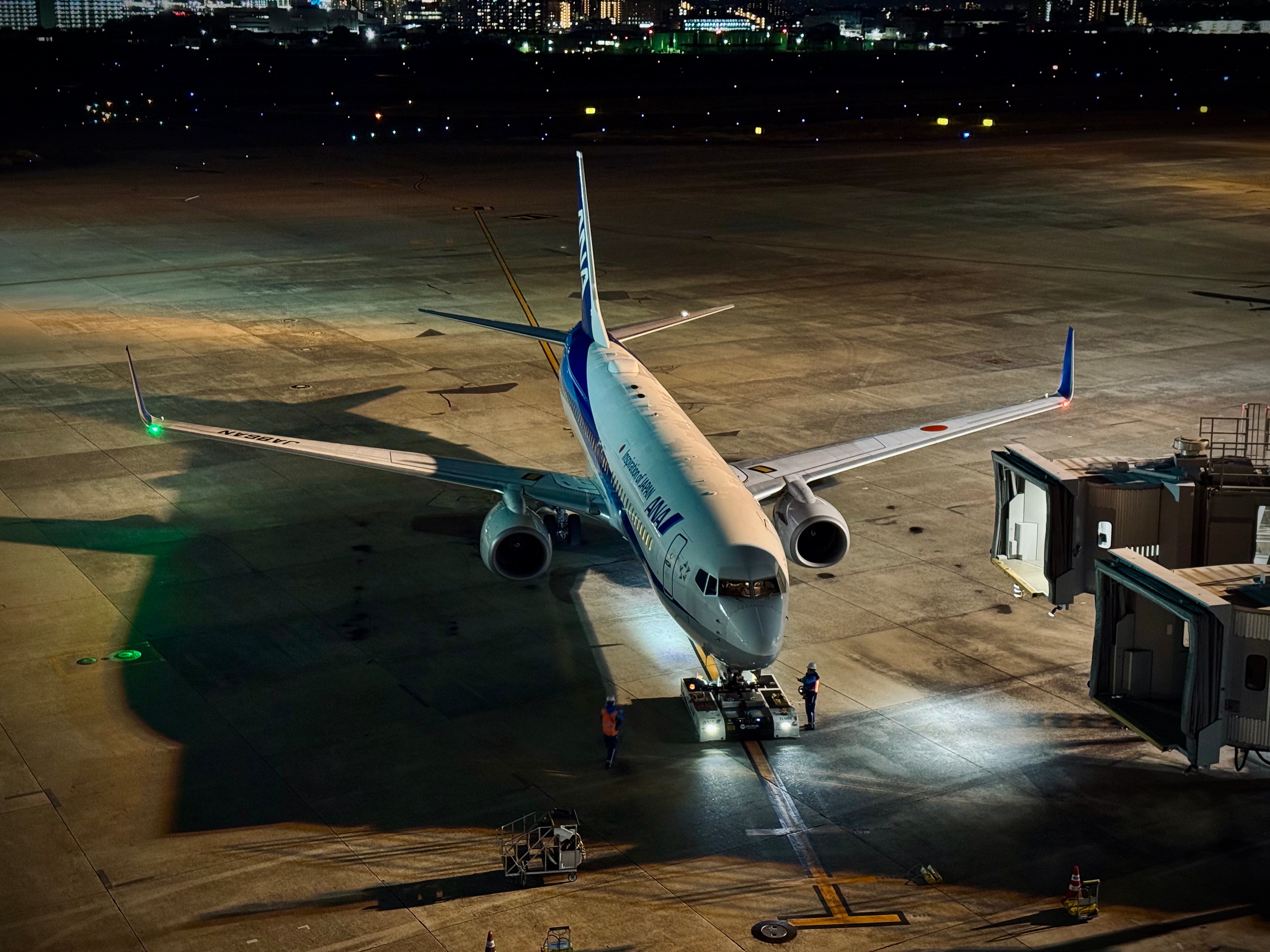


Faster A320/B737 turnarounds with electric towbarless tugs come down to five key questions ground handling managers ask before making the switch. Here are the answers:
Electric towbarless tugs reduce nose gear connection time to just 10–15 seconds — compared to the multi-step process of fetching, aligning, and connecting a conventional towbar. Across a full pushback cycle, this typically saves one to three minutes per movement.
"British Airways documented a reduction in departure delays of up to 54 percent after introducing Mototok SPACER 8600 NG pushback tugs at London Heathrow."
For a hub handling 100 A320 or B737 movements per day, that adds up to more than 600 hours of recovered operational time per year.
To calculate your own time savings:
- Record your current average pushback time from crew-ready to wheels-rolling
- Estimate time saved per movement with an electric towbarless tug (typically 1–3 minutes)
- Multiply by daily movement frequency
- Apply your cost per minute of delay to get an annualised figure
Nose gear damage is one of the most costly preventable incidents in ground handling. Conventional towbar attachment relies on manual alignment steps that introduce human error — especially under time pressure during tight turnarounds.
Electric towbarless tugs like the Mototok SPACER 8600 NG eliminate this risk through:
- A fully hydraulic, sensor-monitored nose gear loading system
- Automatic connection with the press of a button on the remote
- 360° remote visibility — the operator walks alongside the aircraft at all times, maintaining direct sight lines to the nose gear, fuselage, and wingtips
"The unobstructed view provided by remote operation allows operators to maintain visual contact with the aircraft nose gear throughout the entire movement sequence."
To quantify your safety improvement: establish a baseline incident rate per 1,000 movements, run a pilot on selected gates, and calculate cost per incident multiplied by your reduction percentage.
A conventional pushback typically requires:
- A tractor driver
- One or more wing walkers
- In some operations, a headset operator
That is two to four people per movement. With a remote-controlled electric towbarless tug, one operator handles the entire process.
"All Nippon Airways (ANA) reported that training time for new operators was cut by half after introducing the Mototok Spacer 8600."
Because the operator walks alongside the aircraft with a handheld remote, they have direct sight lines to the wingtips, fuselage, and nose gear at all times — eliminating the need for additional ground crew. In labour-constrained environments, this single-operator capability is one of the most immediate operational benefits.
The purchase price of an electric towbarless tug is higher than a conventional diesel tractor. But total cost of ownership over a full equipment lifecycle tells a different story.
Electric tugs offer significant cost advantages:
- No diesel fuel costs — energy cost per movement drops substantially
- Fewer moving parts — lower scheduled maintenance frequency and cost
- No exhaust aftertreatment systems to service or replace
- Higher operational availability due to simplified electric drivetrains
"Iberia Airport Services calculated that each Mototok electric pushback tug saves approximately 23 tonnes of CO₂ per year compared to a diesel equivalent."
A complete TCO comparison should include: capital expenditure, energy costs per movement, scheduled and unplanned maintenance, downtime cost, and residual value at end of service life. For operators in carbon accreditation programmes, the CO₂ reduction also carries direct financial value.
A phased rollout minimises disruption and allows operators to build a data-driven business case before scaling.
Phase 1 – Pilot
- Select one narrow-body fleet and a cluster of adjacent gates
- Update SOPs and train staff
- Establish KPI baselines: average pushback time, on-time departure rate, nose gear incident frequency, energy cost per movement
Phase 2 – Scale
- Expand to a full pier or terminal
- Refine integration with turnaround management systems and apron traffic control
- Engage unions or works councils early, focusing on ergonomic and safety improvements for operators
Phase 3 – Optimise
- Explore IoT-based fleet monitoring and performance dashboards
- Evaluate semi-autonomous guidance capabilities where available
"With the right metrics, stakeholder engagement and a phased rollout, airlines and ground handlers can demonstrate that electric towbarless tugs contribute not only to greener operations but also to more robust schedules."
Throughout all phases, clear communication with pilots, dispatch, and airport operations control is essential. Pushback profiles, radio phraseology, and emergency procedures should be harmonised and documented from the start.
The switch to electric towbarless tugs on A320 and B737 fleets is no longer a question of whether the technology works — British Airways, ANA, and Iberia have already proven that it does. The real question is how quickly your operation can move from diesel tractors to a faster, safer, and cleaner alternative. Whether you are managing a single hub or a global network, the efficiency gains are measurable, the implementation roadmap is clear, and the business case is there to be built.
Comments